
Glass vs Polycarbonate Veranda: Which Roof Suits Your Home?
When configuring a bespoke aluminium veranda for your patio or garden terrace, the roof glazing defines everything from light penetration and acoustic insulation to seasonal thermal comfort. Explore the technical distinctions between 8.76mm laminated safety glass and 16mm multi-wall polycarbonate to determine the ideal canopy for your architectural setting.
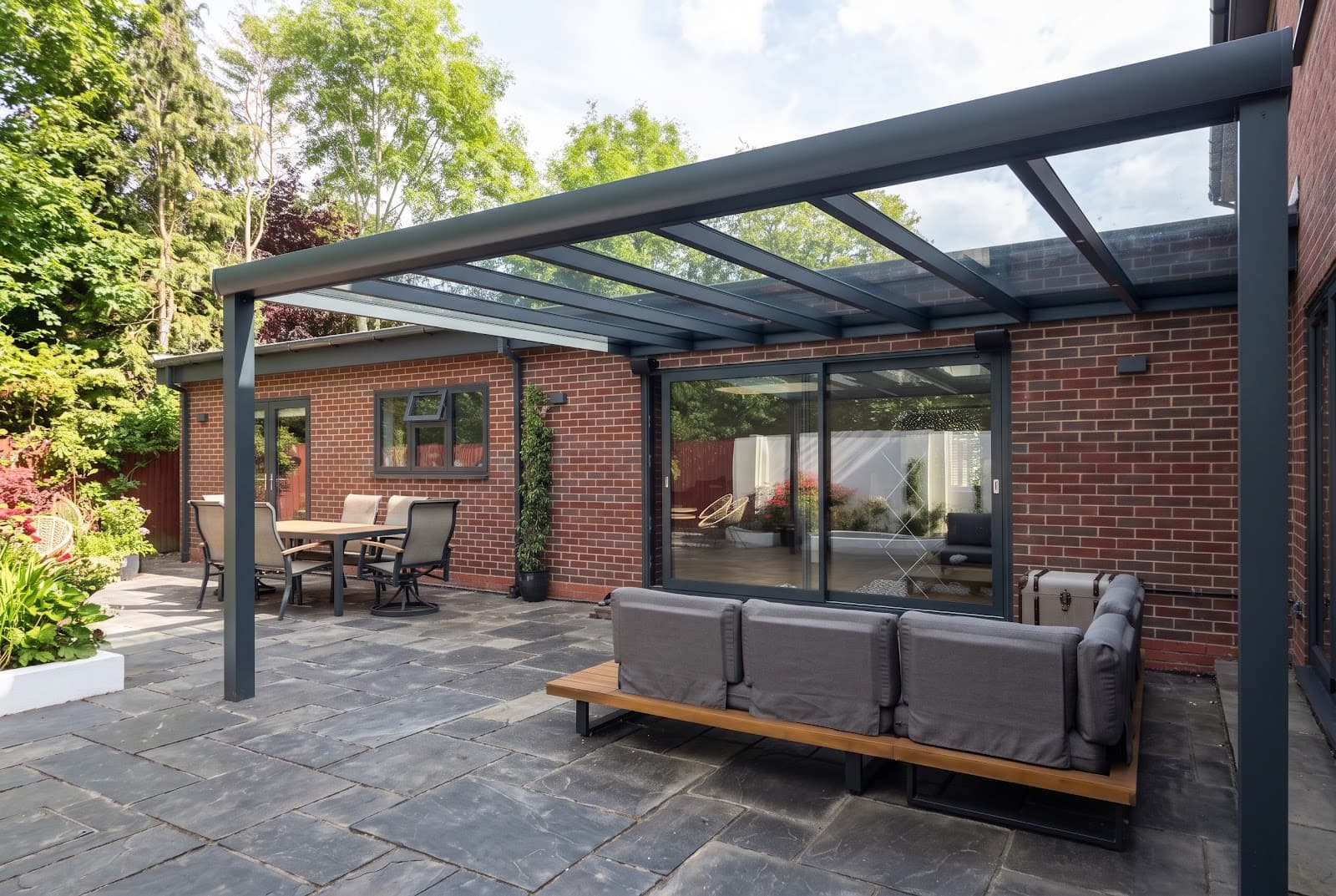
1. Natural Light & Sky Clarity
For most British homeowners, ensuring adjacent interior living rooms remain bright and welcoming throughout the seasons is paramount. Glazing selection dictates optical clarity and ambient daylight transmission directly back into adjoining reception spaces.
Offers crystal-clear visual connection with open skies, clouds, and surrounding foliage. Lets the most daylight through to the rooms behind.
Diffuses direct sunlight softly across the patio, eliminating sharp shadows and creating gentle ambient illumination.
2. Acoustic Comfort During UK Rainfall
The unpredictable British climate means your canopy will encounter frequent rain showers. The physical density and composition of your roofing material directly govern acoustic resonance.
Composed of dual sheets bonded with an internal polyvinyl butyral (PVB) interlayer, laminated safety glass absorbs rain impact energy. The resulting sound is a gentle, muffled white noise, allowing you to dine, read, or host guests comfortably beneath the shelter.
Because polycarbonate sheets are lightweight and consist of hollow structural flutes, rain droplets trigger surface vibrations. While manageable during light drizzle, heavy British rainfall creates noticeable sound. For bedrooms positioned immediately above the canopy, glass is favoured for acoustic quietude.
3. Shade, Glare & Solar Transmission
Garden orientation is a critical engineering factor. South and west-facing gardens receive intense solar radiation during high summer, whereas north-facing patios require maximum light preservation.
Opal (milky frosted) polycarbonate panels excel at scattering direct sunlight, softening heat buildup and mitigating sharp glare without requiring supplementary blinds.
Clear laminated safety glass preserves early morning rays and ensures optimal daylight entry into your home during the darker winter months.
For homeowners seeking the premium aesthetic of glass with reduced brightness, tinted glass options soften visible glare across the patio while retaining sky views. As noted in our technical specifications, tinted glass reduces visible brightness without eliminating heat transmission, making it ideal when paired with under-roof shading blinds.
4. Durability & Long-Term Maintenance
Every Usta Veranda installation utilizes powder-coated aluminium frames that resist corrosion, peeling, and rust. However, the maintenance cycles and lifespans of the roofing elements vary based on environmental exposure.
Laminated Glass Maintenance & Longevity
Laminated glass is easy to keep clean. Leaves, city grime, and moss wash off easily with rainfall or an annual hose-down. Expected lifespan is long-lasting and indefinite with the aluminium frame.
UV-Protected Polycarbonate Durability
Modern 16mm Exolon multi UV 5X polycarbonate sheets feature a UV-protected outer layer that helps resist weathering and yellowing. While resilient against impact from falling branches or garden debris, the composite surface requires non-abrasive cleaning sponges. Breather tape on the panel ends helps reduce condensation and dirt inside the flutes.
5. Summary Comparison Matrix
A balanced overview designed to help homeowners and architects compare key performance characteristics side by side.
| Feature | Laminated Glass (8.76mm) | 16mm Exolon Polycarbonate |
|---|---|---|
| Visual Transparency | Very clear sky view | Soft, diffused light |
| Acoustic Insulation | Quieter in rain | Louder in heavy rain |
| Weight per m² | Heavier – needs a stronger frame | Lightweight |
| Glare Control | Bright daylight (blinds optional) | Effective anti-glare (Opal) |
| Scratch Resistance | Hard-wearing surface | Requires non-abrasive cleaning |
| Expected Lifespan | Long-lasting | Durable, UV-protected |
| Investment Level | Premium architectural tier | Budget-friendly accessibility |
6. Next Steps & Technical Advice
Choosing between laminated safety glass and multi-wall polycarbonate ultimately balances your aesthetic ambitions, acoustic requirements, and project budget. Neither material is universally superior; each solves unique outdoor living challenges with structural integrity.
Glass Roof Verandas
8.76mm (44.2) laminated safety glass panels delivering optical clarity, sky views, and superior acoustic dampening during rain.
Polycarbonate Verandas
16mm Exolon multi UV 5X polycarbonate (Clear or Opal) providing soft diffused shade and lightweight cost-effective coverage.
Need Tailored Advice for Your Garden?
Visit our Southall showroom to see our materials, glass and polycarbonate samples. Alternatively, simulate your exact garden wall measurements using our bespoke 3D configurator.
Related Architectural Guides
Bioclimatic Louvres vs Retractable Pergolas: Understanding the Difference
How adjustable aluminium louvres and retractable PVC canopies differ in shade modulation, open-sky exposure, and weather resilience.
Planning Permission for Garden Verandas & Pergolas in the UK
Key factors when assessing permitted development guidelines, boundary distances, and when to speak with your local planning office.